
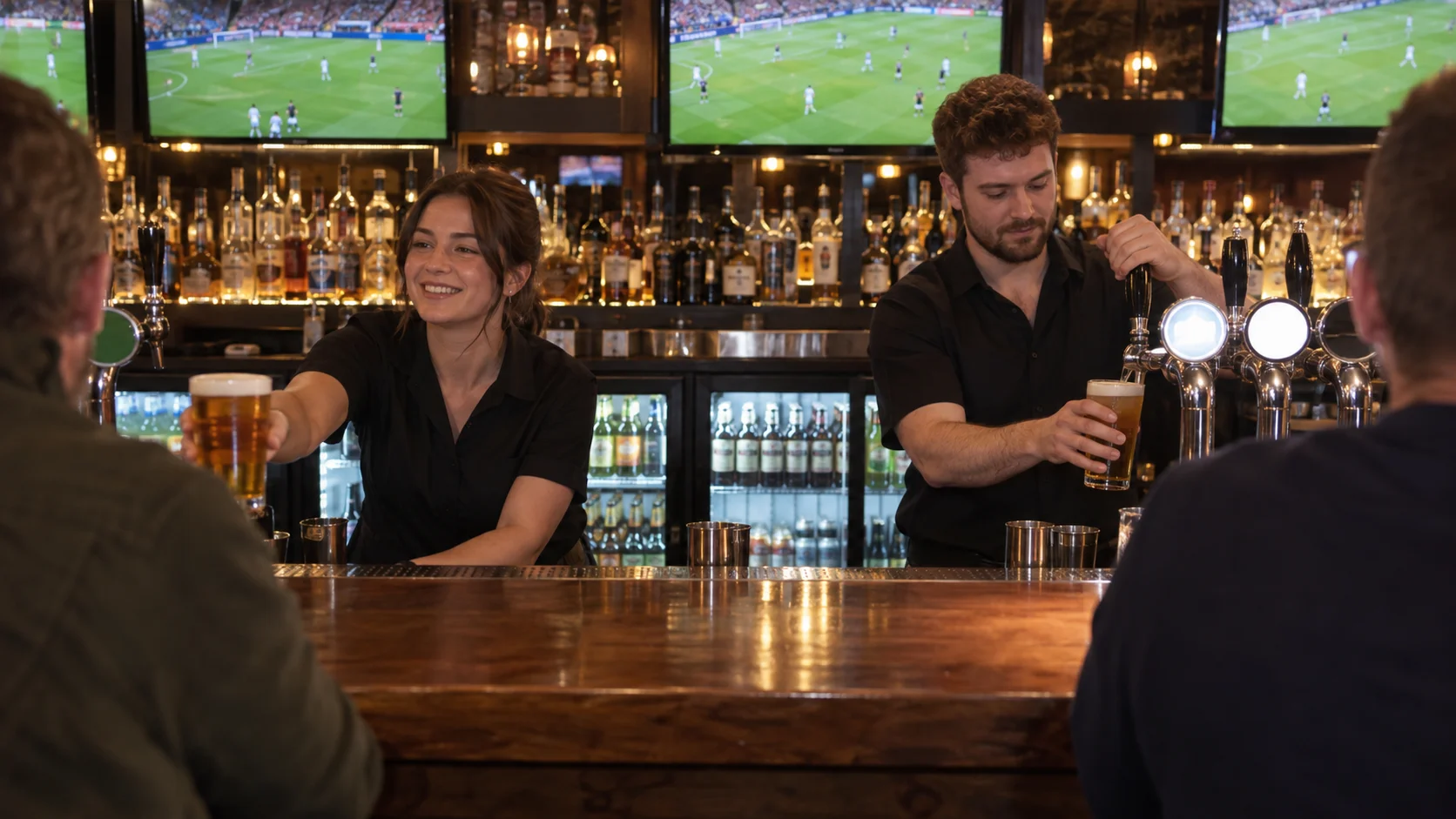
A customer crosses the line. A member of the team tells the manager. The manager then has two jobs at once: protect the person in front of them and keep control of the venue.
From 30 October, the preparation behind that response will carry more legal weight. For pubs, bars, restaurants, hotels and event venues, this is not a remote HR issue. It reaches the point where customer behaviour, manager authority, staffing and incident reporting meet.
What changes on 30 October?
Two confirmed changes take effect on 30 October 2026.
Employers will need to take all reasonable steps to prevent sexual harassment of their workers. The current duty, in force since October 2024, requires reasonable steps. Employers will also be potentially liable for harassment by third parties, including customers, unless they took all reasonable steps to prevent it.
The Department for Business and Trade page, updated on 17 September 2026, confirms the date and says the changes apply in England, Wales and Scotland. Northern Ireland has separate equality and discrimination law.
Third parties can include customers, clients, contractors, tradespeople, people attending events and other members of the public. The third-party protection is wider than sexual harassment alone. It covers harassment linked to protected characteristics within the Equality Act harassment provisions. Acas explains the scope and gives practical examples.
This is confirmed future law, not a consultation proposal. It does not mean every unpleasant customer interaction automatically becomes unlawful harassment, or that an employer must prevent every unforeseeable incident. The official factsheet says the circumstances, available steps and reasonableness of the response will matter.
Why hospitality needs to pay attention
Customer contact is the work in hospitality. Teams also work late, manage alcohol, deal with queues, refuse service and move between public and quieter parts of a building.
That does not make every venue high risk in the same way. It does mean a generic policy in a folder is unlikely to tell a Saturday-night manager what to do when a regular harasses a bartender, a hotel guest targets a receptionist or an event contractor behaves inappropriately towards a casual worker.
Acas's guidance, updated on 26 August, uses a nightclub as an example. It points to measures such as extra door supervisors, training, alarms, cameras, code words, safe areas and incident tracking. These are examples rather than a universal checklist. Read the Acas third-party harassment guidance.
The useful question for an operator is not simply, “Do we have a policy?” It is, “Would the person running this shift know how to use it?”
What a hospitality business should check now
- Map the contact points. Look at where teams meet customers, delivery drivers, contractors and event guests. Include online messages, hotel rooms, private hires, smoking areas and closing time, not just the main bar or restaurant floor.
- Review incident records. Check whether reports show what happened, who was told and what action followed. Look for repeated locations, times, customers or working conditions.
- Give people more than one reporting route. A worker should not be left with only the manager involved in the incident, or told that customer behaviour is simply part of the job.
- Make manager authority explicit. Be clear about who can refuse service, remove a guest, call security, move a worker to safety and escalate after the shift. A late-night manager should not have to wait until head office opens to make a basic safety decision.
- Test staffing and support on higher-risk shifts. Acas identifies staffing levels, security staff, training and safety equipment as possible considerations in higher-risk environments. Review whether the rota leaves somebody isolated when predictable problems tend to occur.
- Check policies, bookings and contracts. Acas suggests that relevant customer terms, hotel booking conditions and supplier or contractor arrangements may need review. The right measure will depend on the business.
- Practise the response. Managers need to know how to protect the worker, record the incident, preserve relevant evidence and follow up. Moving the affected person away may be necessary in the moment, but it should not become the only response.
Keep a short record of the risks considered, the steps chosen and why other measures were not reasonable for the venue. The official guidance recognises that size, sector, work and resources affect what is reasonable. It also says employers are not expected to take unworkable steps or predict the wholly unforeseeable.
What already applies?
The current preventative duty has applied since 26 October 2024. Employers already need to anticipate sexual-harassment risks and take reasonable steps to prevent them.
The October 2026 change raises that threshold to all reasonable steps and adds explicit third-party harassment protection. Acas's Employment Rights Act overview, updated on 14 September 2026, separates the duties already in force from those beginning on 30 October.
Businesses should therefore treat this as a review of an existing responsibility, not the first time harassment prevention has appeared on the agenda.
What remains uncertain?
The 30 October commencement is confirmed. The detailed future rulebook is not finished.
The government can later make regulations specifying steps that count as reasonable for preventing sexual harassment. Its official factsheet says those regulations are expected in 2027 or 2028 after consultation. The Department for Business and Trade also says further Equality and Human Rights Commission guidance is still to come.
That future work does not delay the October duties. It does mean operators should avoid treating any unofficial template as a guaranteed compliance formula. Use current official guidance, adapt it to the venue and keep the review live.
The practical point: customer behaviour cannot be controlled perfectly. The business can control whether risks are considered, managers are equipped, reports go somewhere and action follows.
Topics: Harassment, staff safety, employment law, customers and people management.
General information only: This briefing is not legal advice. Check current official guidance and obtain advice on your circumstances before changing policies, contracts or disciplinary processes.