
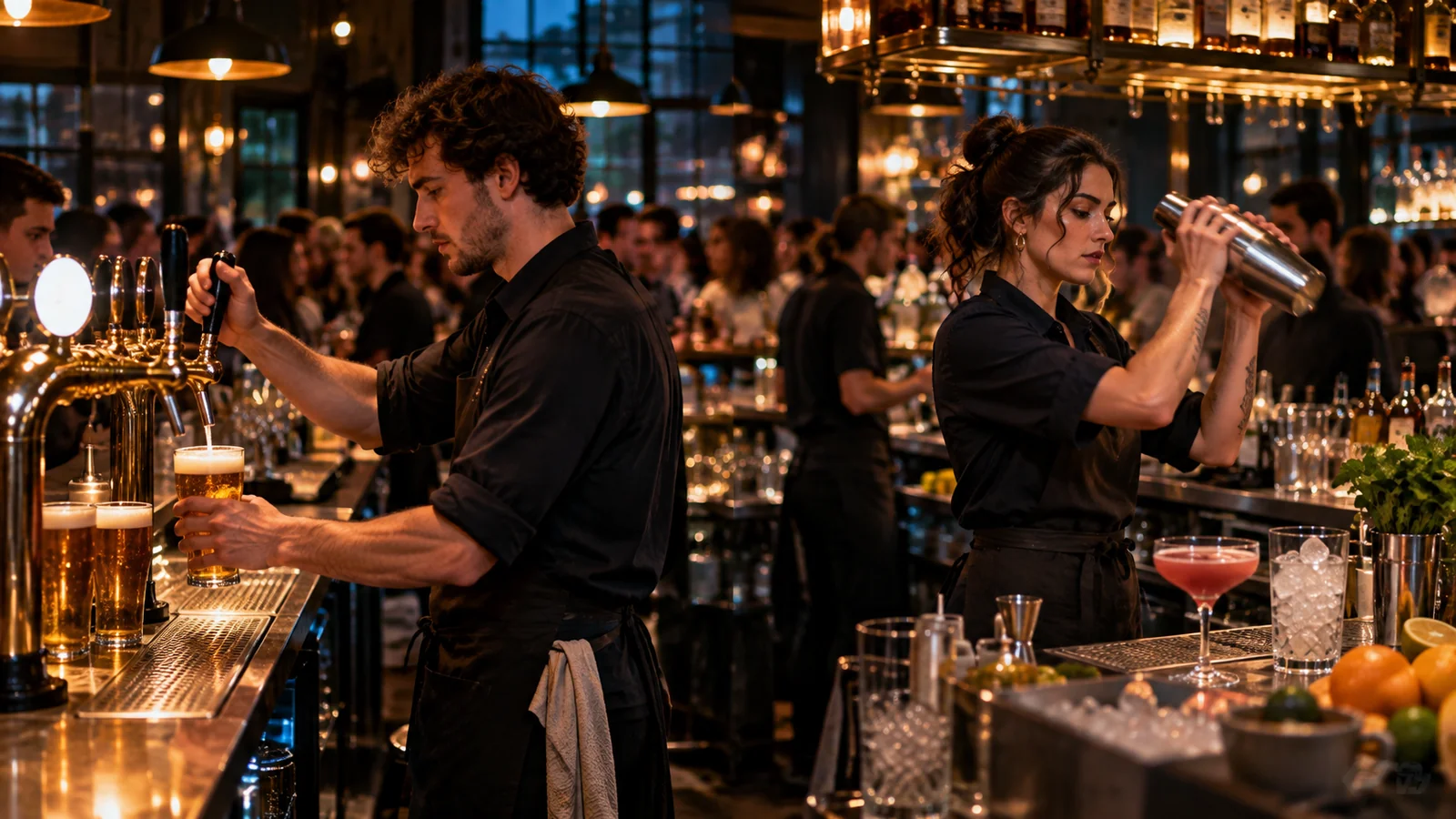
At 9pm, two bars each take £1,000.
One has its drinks out, glasses moving and a manageable queue. The other has tickets curling out of dispense and a duty manager trying to find more ice.
On Monday, their hourly sales look identical.
The work behind those sales doesn't.
Imagine two deliberately simplified hours, both measured excluding VAT:
- Bar A: 200 draught drinks at an average £5 net each.
- Bar B: 80 made-to-order cocktails at an average £12.50 net each.
Both take £1,000. But they've sold very different things.
Suppose, purely to illustrate the calculation, the first bar takes 20 seconds of active pouring time per pint and the second takes 90 seconds of active preparation per cocktail. That represents roughly 67 minutes versus 120 minutes of drink-making work across the hour, before taking payment, washing glasses, restocking or dealing with guests.
Those times aren't industry benchmarks. A good draught setup, batching, menu design and the skill of the team can change them enormously. The useful calculation is the one you make from your drinks and your stations.
Sales don't tell you where the queue formed
A bar's wage percentage is an important commercial measure. It still won't explain why an apparently well-staffed Saturday collapsed at 9:15.
Perhaps the extra work came from cocktails. Perhaps it was the sudden wave of orders arriving together. Perhaps both bartenders kept leaving their stations to fill ice, retrieve glassware or run to the cellar.
Those are different problems.
If two bartenders are continually making drinks and orders are building, an additional trained bartender might buy genuine capacity. If the same two are waiting for clean glassware, adding a third person to stand at the counter may achieve very little. A barback, a better pre-service setup or a different glasswash arrangement could be the stronger use of those hours.
For the broader argument, see Headcount Is Not Coverage. The extra question here is what each sale actually asks your team to do.
Try this before copying next Saturday's rota
Watch twenty minutes of a genuinely busy service. Count the types of drinks being ordered, not just the money going through the till. Note the time people spend making them and the occasions they have to stop because something isn't ready.
Don't turn the exercise into a stopwatch competition between employees. You're looking for the point where work gets held up, not somebody to blame.
Then ask whether the rota needs another person making drinks, someone supporting the people making them, or a better setup that lets the existing team stay productive.
Sometimes the answer really is another bartender. Sometimes the answer costs less. Occasionally it means changing the menu or preparation rather than adding an hour of labour at all.
We make a similar distinction between spending less and spending well in Cutting Labour Is Not the Same as Controlling Labour.
A £1,000 hour belongs in the forecast. What it took to serve that hour belongs in the next rota.